

Most players get talked into a cheap lap steel first and then spend years wondering why it never sounds like the records that got them interested in the instrument. Wood, pickups, and hardware matter more on a lap steel than on almost any other guitar, because the bar sits right on top of the strings and every bit of resonance or dead spot gets amplified straight into your ear.
I have researched many of the best lap steel guitars on the market, and narrowed them down to these because each one earns its price rather than just carrying a name. Whether you want the modern flexibility of a Multibender, the dual voice of a resonator, the boutique tone of a hand built Weissenborn style neck, or a solid budget option that still holds its own on stage, one of these should do the job.
This post contains affiliate links. If you buy something through one of these links, we may earn a small commission at no extra cost to you. We only recommend products we genuinely think are worth your money.
In this guide
Best overall: Duesenberg Fairytale Lapsteel Goldburst
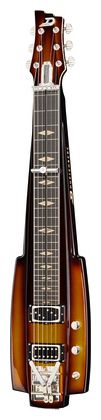
I keep coming back to this one whenever someone asks me for a lap steel that does more than a slab of wood with a pickup can manage. The Fairytale is built around a korina body and neck, and the fingerboard is black anodized aluminum with an integrated sliding capo that runs along a track.
That capo alone changes how you approach the instrument, because you can shift keys without abandoning the open tuning you set up. Duesenberg quotes a 25.5 inch scale, a 65mm nut width, and a PUR lacquer finish. The dimensions come in around 94 x 19 x 4.2 cm, and two felt strips on the back keep it from sliding off your knee or a table.
The electronics are where it separates itself. You get a GrandVintage humbucker in the bridge and a SingleTwin Domino hum canceling P90 style single coil at the neck, wired to one volume, one tone, and a three way selector. The tone control is a short throw speed pot with only 70 degrees of travel, which lets you do those swelling volume and wah style effects with a small pinky move. The Multibender bridge is the party piece: you can add up to six palm operated levers, one per string, to raise or lower preset pitches, which gets you into pedal steel territory without the pedals.
Owners on Thomann rate it highly, with one German reviewer calling it a fully realized instrument with two great pickups, cleanly finished, full and punchy but never harsh. A UK buyer described it as more versatile than a traditional lap steel and far easier to move around and play than a pedal steel, though he noted it is still pricey for what it is because so few alternatives exist. On forums, players single out the palm benders as smoother and more stable than Hipshot units. This is the pick for a gigging player who wants pedal steel color and modern reliability in a package that fits in a case.
Best resonator and electric in one: Beard Guitars Road-O-Phonic TS
Price: around £3,899
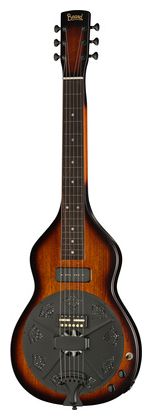
Built by Paul Beard’s small team in Hagerstown, Maryland, the Road-O-Phonic is the instrument I reach for when I want a resonator voice and an electric voice from the same guitar. It is a squareneck solidbody resonator with a poplar body and poplar neck, an ebony fingerboard with white dot inlays, a bone nut, 19 frets, and a 25 inch scale.
The heart of it is a 9 inch Beard handspun aluminum spider bridge cone paired with a three pickup system: a Lollar P90 at the neck, a Lollar Gold Foil in the middle with a custom satin black cover, and a Fishman Nashville spider piezo in the bridge, all fed through a Fishman Power Chip preamp. A TRS splitter lets you run magnetic and piezo separately in stereo, or blend everything to mono. Gotoh black tuners and a tobacco sunburst finish round it out, and it ships in a case, made in the USA. It is usually set up in open D, with open G the other common choice.
The versatility is the whole point. The Music Emporium, an authorized Beard dealer, describes it as a solid wood resophonic guitar with both electric and acoustic pickups you can run separately or blend, and says the design works remarkably well whether you want a convincing amplified dobro sound or a more modern lap steel setup.
They note things get most interesting when you blend the two Lollars or mix the resonator’s acoustic and electric pickups. Gigging players on the Steel Guitar Forum back this up, with one owner reporting he uses the Roadie for about a quarter of his set now, running the magnetic pickup with no feedback issues even sitting right in front of his amp near the drums, while still getting enough dobro tone to satisfy an audience. Megan Lovell of Larkin Poe demonstrates one in Beard’s own walkthrough videos, and Beard’s roster includes signature artist Jerry Douglas.
A couple of honest caveats. The acoustic voice leans toward a biscuit bridge character rather than a deep dobro bark, and at least one player flagged tuning quirks with a capo on the shorter scale. This is a boutique instrument for the player who genuinely needs both worlds and will pay for handmade construction.
Best value Weissenborn: Gold Tone SM+ Weissenborn
Price: around £949
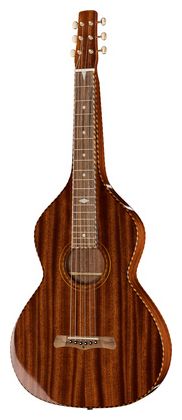
For players drawn to the haunting hollow neck acoustic sound rather than an electric plank, the Gold Tone SM+ Weissenborn is the best value I have found from a widely stocked retailer. It is a Weissenborn Hawaiian style hollow neck slide guitar with a mahogany body, a solid mahogany top, and mahogany and maple rope binding that gives it real vintage character.
The fingerboard is blackwood with traditional inlays, the bridge is ebony, the nut is bone, and the scale is 628mm, roughly 24 inches, with a 49.2mm nut width. Kluson machine heads and gold hardware finish the high gloss natural build, and it ships in a case. Gold Tone specifies open D or open G tuning, DADF#AD or DGDGBD, and warns against high tension tunings like E because of the traditional hollow neck construction.
The appeal is the fully hollow neck that extends the body cavity, producing the mysterious, singing tone Weissenborn players love, on an all solid mahogany instrument that costs a fraction of a vintage original or a boutique koa build. One French owner on Thomann praised the perfect bass to treble balance, saying you are struck by the even response from the very first chord, and called it excellent value for a solid wood Weissenborn.
The honest part: this model carries a mixed 3.4 out of 5 rating on Thomann from just 5 ratings (2 five star, 1 three star, and 2 two star), and the low marks are serious. Owner jjmBALOO wrote on 09.01.2021 that the wooden bridge had given way, was repaired under warranty, then after a few months gave way again, ending with a clear refusal to recommend it.
A second French owner reported the same bridge failure after only a few short playing sessions. If you buy one, keep it humidified, use only the recommended light gauge strings and tunings, and inspect the bridge. Treated correctly it is a lot of Weissenborn for the money, ideal for blues and roots slide players who want acoustic authenticity.
Best on a budget: Gretsch G5700 Electromatic Lap Steel
Price: around £389
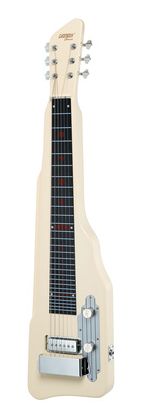
Not everyone needs to spend four figures, and the Gretsch G5700 Electromatic is the one affordable model I happily recommend to players stepping up from a beginner slab. It channels 1950s and 1960s Hawaiian electric tone, and Guitar World notes the design is apparently based on the 1963 Electromatic Mainliner, while Gretsch Talk members point out the originals were made in Chicago by Valco.
The body is a solid mahogany slab for sustain, the scale is 22.5 inches, and the fingerboard is a 28 fret plastic board with circle, triangle, square, and diamond position markers that are easy to read in low light. It has an aluminum nut, a chrome plated string through body bar bridge with a cast zinc cover, a single volume and single tone control under a deco plate, and Gretsch’s arrow knobs.
The single coil is the talking point. Guitar World measured the low noise single coil at a DCR of 5.42 kohms, and reviewers describe it putting out smooth sounds with just enough bite and jangle. That same review admired the classy molded looking Art Deco form but flagged that the string spacing feels cramped compared with its old UK made Bennett lap steel, which has a spread of 46mm at the nut and 55mm at the bridge, and noted the tall bridge cover is worth removing for playing.
Forum owners are fond of the tone, with one calling out a beautiful sound at a fair price, and players note it is genuinely gig worthy. It is worth knowing there is a related model, the G5715 with a P90 style pickup, that some players find a touch raw by comparison.
Build is decent for the money, made in China, and the plastic fingerboard is painted rather than inlaid, so it may show wear over years of heavy use. For a first serious lap steel, or a knockaround instrument for stage and studio, the G5700 punches well above its price and carries the Gretsch name honestly.
My verdict
For most players stepping up from a beginner slab, the Gretsch G5700 is the place to start: affordable, gig worthy and full of vintage Hawaiian character. If you gig regularly and want pedal steel colour without the pedals, the Duesenberg Fairytale is the best all rounder here, thanks to its sliding capo and Multibender bridge. Want that haunting, hollow neck acoustic sound? The Gold Tone SM+ Weissenborn is a lot of instrument for the money, but follow the recommended strings and tunings and keep an eye on the bridge. And if you genuinely need a resonator and an electric in one guitar, and budget isn’t a concern, the Beard Road-O-Phonic TS is the one to own.

- Best Headphones Under £25 in 2026 - October 8, 2026
- Best Earphones Under £50 in 2026 - October 2, 2026
- Best Guitar Amps For Blues Music - October 1, 2026

